
In commercial knitwear manufacturing, every minute of unmanaged machine downtime directly erodes profit margins. For textile factory managers in major garment hubs like Bangladesh, Turkey, and Southeast Asia, controlling operational costs hinges on two crucial metrics: minimizing machine downtime and reducing cylinder needle wear.
While purchasing high-precision machinery like EASTINO Circular Knitting Machines provides the foundation for operational stability, achieving maximum ROI requires disciplined daily maintenance and preventive management.
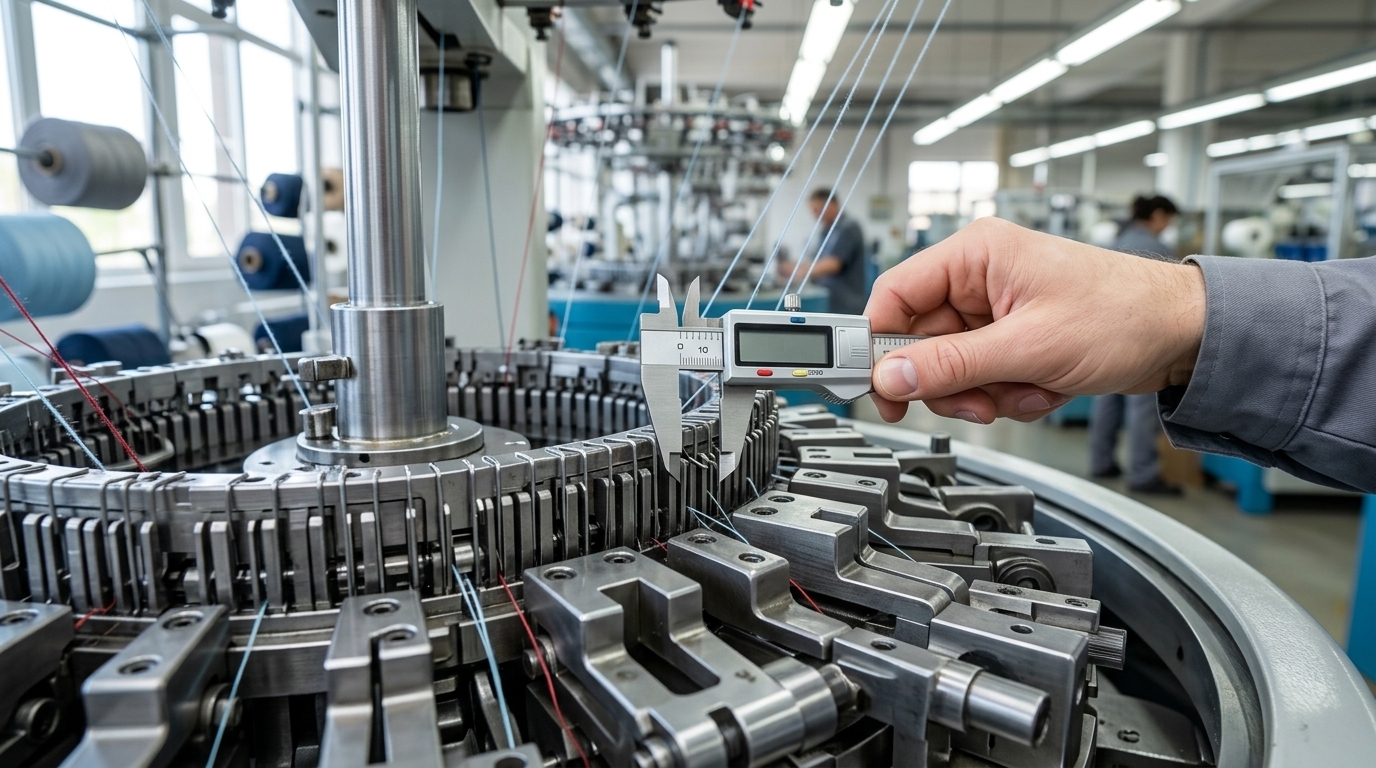
Based on technical feedback from high-efficiency textile mills globally, here is the definitive operational guide to extending needle life and reducing costly downtime.
1. Shift from Intuition to Data-Driven Maintenance Logging
High-performing textile mills distinguish themselves through precise operational logging rather than relying on operator intuition.
The Machine Downtime Logbook
Top mills maintain an active digital or paper logbook for every single jersey and double jersey machine on the factory floor, tracking four core metrics:
Downtime Duration & Timestamp: Exact hours lost per shift.
Root Cause Classification: Yarn breakage, needle breakage, lubrication fault, or electrical alarm.
Corrective Action Taken: Cam adjustments, needle replacements, or yarn path cleaning.
Resolution Time: Duration required to resume full-speed production.
Engineering Insight: If a machine suffers repeated needle breakage in the exact same cylinder slot within 48 hours, it is rarely random bad luck. Data logging immediately reveals underlying issues—such as a worn cam segment, damaged sinker, or debris in the needle groove—preventing repetitive parts damage.
2. Standardized Maintenance Cycles (Preventive Maintenance Schedule)
A primary cause of high machine downtime is delaying inspections until fabric defect alarms sound. Implementing a structured maintenance calendar prevents defect creation before it occurs.
Technical Correction on Factory Maintenance Cycles:
Standard industry practices specify that submerged cleaning, total oil flushing, and complete needle/sinker removal should be performed every 2,000 to 2,500 operating hours (approximately every 3 to 4 months of continuous operation)—rather than waiting 6 months. Waiting 6 months under 24/7 production leads to heavy oil sludge buildup, thermal expansion, and premature cam failure.
Recommended Circular Knitting Maintenance Calendar:
| Maintenance Frequency | Operational Focus & Inspection Checklist | Primary Goal |
| Every Shift (8–12 Hours) | Clean fly lint, check oil reservoir levels, test yarn stop-motion sensors, clean ceramic yarn guides. | Prevent yarn tension spikes and lint clogging. |
| Every 500 Operating Hours | Inspect needle latch elasticity, check sinker wall wear, replace bent or worn needles. | Eliminate vertical fabric lines and loop distortion. |
| Every 2,000–2,500 Hours | Deep maintenance: Check cam clearance, drive belt tension, dial-to-cylinder gap alignment, complete oil tank flush, and full needle/sinker ultrasonic cleaning. | Prevent major mechanical seizure and maintain precise fabric GSM. |
3. Fine-Grained Needle Management Strategies
Needles and sinkers represent the largest ongoing consumable cost in circular knitting operations. Extending needle lifespan requires strict factory floor protocols:
Never Mix Needle Batches or Ages: Mixing brand-new needles with worn needles in the same cylinder section creates uneven latch heights, resulting in immediate fabric defects and accelerated wear on adjacent needles.
Investigate Structural Wear Before Replacing: When encountering repetitive needle breakage, technicians must inspect the stitch cams, sinker ring, and cylinder slots for burrs or metallic particles before inserting new Textile Spare Parts .
Ensure Continuous Automated Lubrication: Insufficient or improper oil viscosity increases thermal friction rapidly. High-speed circular knitting machines require clean, metered needle oil formulated to wash out easily during post-knitting fabric finishing.
4. Case Study & ROI: Extending Needle Life in a Bangladeshi Mill
The Challenge: A knitting facility in Dhaka operating 20 older single jersey units experienced high needle consumption (averaging 1,200 replaced needles per month per machine) and frequent unrecorded downtime.
The Solution: The mill upgraded to EASTINO Single Jersey Knitting Machines and implemented a strict 2,000-hour preventive oil change and shift-logging system.
The Result:
Needle Consumption: Dropped by 42% within the first 90 days, saving over $14,000 annually in replacement parts.
Machine Uptime: Overall Equipment Effectiveness (OEE) increased from 74% to 88%.
Payback Period: Achieved full capital expenditure ROI within 10 months through reduced downtime and spare parts savings.
Conclusion: Operational Discipline Meets Precision Engineering
Reducing machine downtime and needle consumption does not require overly complex machinery. Success comes down to uniting high-precision equipment with data logging, standardized maintenance, fine-grained needle management, and automated monitoring.
Upgrade Your Production Efficiency with EASTINO
Looking to boost your mill’s output and reduce operating overhead? EASTINO Machinery delivers high-capacity Single Jersey Knitting Machines and Double Jersey Knitting Machines built for long-term durability and low maintenance costs.
Need technical guidance or a customized machine quotation? Contact our textile engineering team today for expert support!
WhatsApp: https://wa.me/8618005950027
Email: sales@eastknittingmachine.com
Link in Bio: https://eastknittingmachine.com/
Post time: Sep-29-2026