
Selecting the correct Gauge (E) for a circular knitting machine is a critical decision that impacts fabric quality, production efficiency, and overall factory ROI.
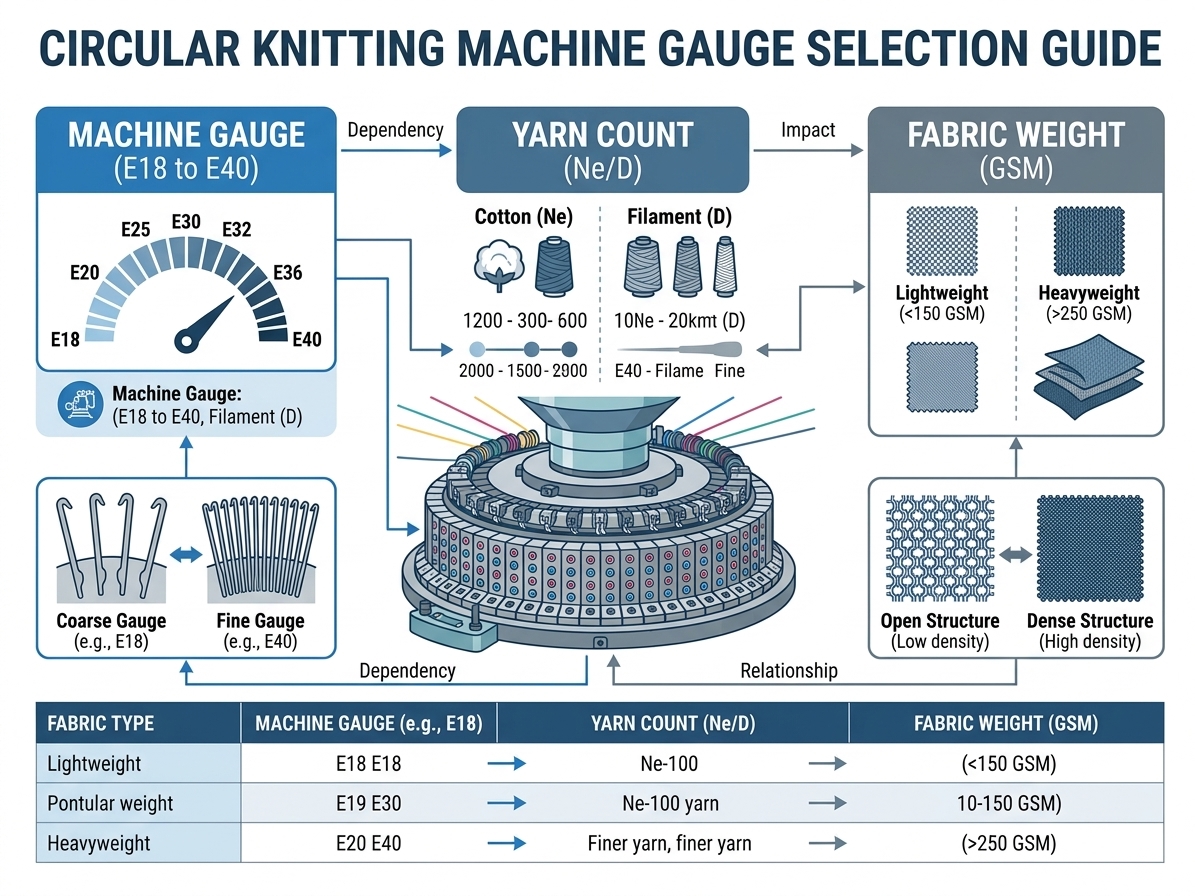
An improper gauge-to-yarn setup often causes frequent yarn breakage, uneven fabric weight, or costly machine needle damage.
Whether you are evaluating a Single Jersey Circular Knitting Machine or a Double Jersey Machine, matching machine gauge, yarn specifications, and target fabric weight (GSM) requires precision. This comprehensive guide provides actionable engineering insights, real-world case studies, and maintenance practices to help you optimize your knit production.
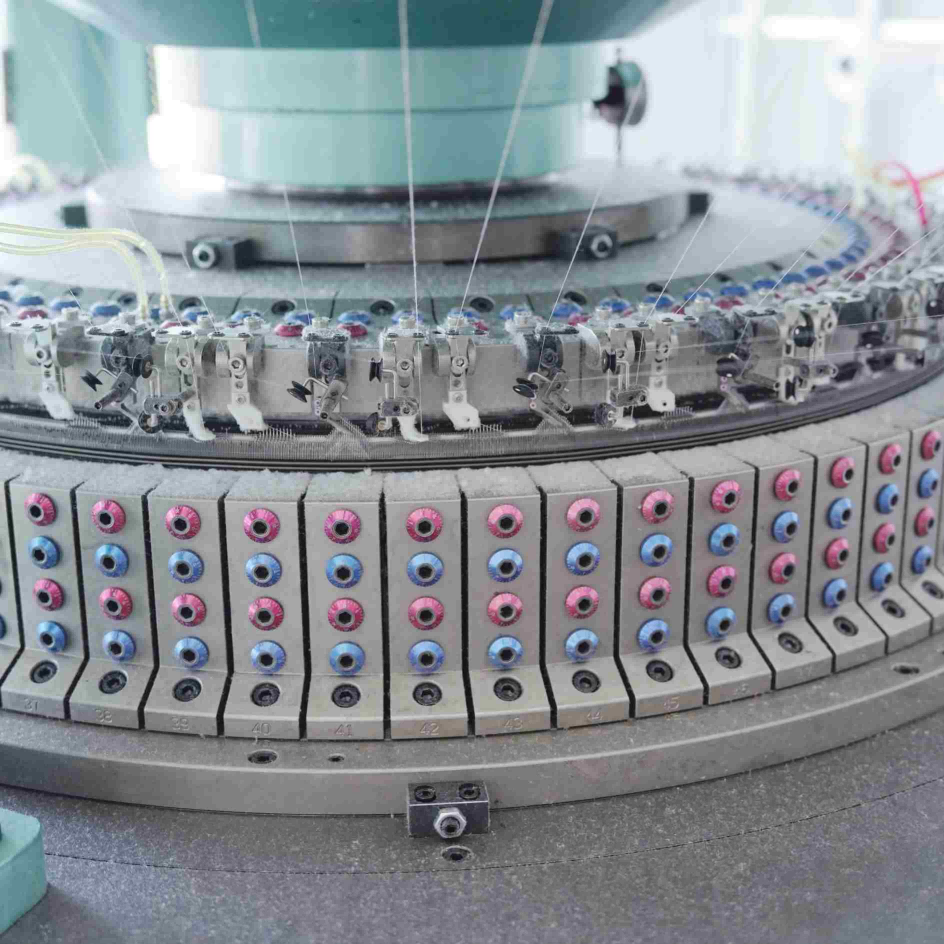
1. Selection Logic: Experienced Manufacturers vs. Product-Oriented Buyers
In B2B textile machinery procurement, buyer approaches fall into two distinct categories:
- Experienced Manufacturers: Typically order directly by technical specifications, including Gauge (E), Cylinder Diameter, Number of Feeders, and Total Needle Count.
- New Ventures & Apparel-Driven Buyers: Often start from a finished fabric sample or garment design, requiring a reverse-engineered machine setup.
Industry Tip: If you do not have explicit machinery specifications, do not guess the gauge. Starting from a target fabric sample is the most reliable way to prevent production bottlenecks and high scrap rates.
2. Why Fabric Weight (GSM) and Yarn Count Do Not Match 1:1
A common industry misconception is relying on a static lookup table where a specific Yarn Count (e.g., 30s Cotton) automatically dictates a fixed Fabric Weight (GSM) and Gauge.
In actual production, final fabric weight varies based on:
- Fabric Structure: Plain jersey, rib, interlock, or french terry perform differently under tension on the same gauge.
- Yarn Elastane & Composition: Blends involving spandex/elastane behave differently during loop formation.
- Stitch Cam Density: Adjusting stitch length changes density and weight without replacing yarn or cylinder components.
- Finishing Shrinkage: Post-knitting processes like washing, dyeing, and heat setting alter the final GSM by 5%–15%.
3. Technical Matching Matrix: Machine Gauge, Yarn Count & GSM
Use this reference matrix for standard single jersey production:
| Machine Gauge (E/GG) | Suitable Spun Yarn Count (Ne) | Suitable Filament Denier (D) | Typical Fabric Weight Range (GSM) | Primary Applications |
|---|---|---|---|---|
| E18 – E20 | 16s – 24s | 150D – 200D | 180 – 260 GSM | Heavy T-shirts, Casual wear, Fleece base |
| E24 – E28 | 28s – 40s | 75D – 100D | 120 – 180 GSM | Standard T-shirts, Activewear, Underwear |
| E30 – E32 | 40s – 60s | 50D – 75D | 90 – 140 GSM | High-density Fine Jersey, Athleisure |
| E36 – E40 | 60s – 80s+ | 20D – 50D | 60 – 100 GSM | Ultra-fine Luxury Apparel, Seamless Wear |
4. Case Study & ROI: EASTINO vs. European/Japanese Brands
Upgrading machinery requires evaluating total cost of ownership (TCO) and return on investment (ROI).
Case Study: Textile Factory in Bangladesh
A Bangladesh mill upgraded 12 aging European units to EASTINO High-Speed Single Jersey Machines.
- Production Output: Achieved a 30% increase in daily tonnage due to optimized feeder placement and high-speed oiling systems.
- Needle & Cam Longevity: Precision heat-treated cams reduced needle wear by 25%, saving over $18,000 annually in replacement parts.
- ROI Payback Period: Full capital expenditure recovery within 11 months, offering performance comparable to Japanese and European brands (such as Fukuhara) at a significantly lower initial investment.
5. “How to Use” & Maintenance: Preventing Common Gauge Mismatches
To maximize machine lifespan and maintain precise fabric GSM, implement these routine operational steps:
- Yarn Tension Calibration: Measure yarn feeding tension across all feeders using a digital tension meter before long production runs.
- Cylinder Cleaning Routine: Remove lint buildup from needle grooves every 8 hours. Accumulated debris alters loop size and creates GSM fluctuations.
- Oil & Lubrication Checks: Ensure automated oil pumps deliver clean lubricant to needles and cams to avoid thermal expansion and gauge misalignment during high-speed runs.
6. The 4-Step Sample Analysis Process
For buyers with unconfirmed parameters, our engineering team offers a reverse-engineering service:
[Target Fabric Sample] ➔ [Lab Structure Analysis] ➔ [Parameter Calculation] ➔ [Tailored Machine Quote]
- Send Fabric Samples: Mail a 20 × 20 cm swatch of your target fabric to our technical lab.
- Lab Testing: Engineers analyze course/wales density, yarn count (Ne/D), loop length, and finishing shrinkage.
- Machine Configuration: We specify the precise cylinder diameter, gauge (E), needle latch types, and feeder layout.
- Quotation & Support: Receive a detailed proposal backed by guaranteed fabric performance.
Conclusion & Next Steps
Matching gauge, yarn, and GSM accurately prevents costly trial-and-error in commercial textile manufacturing. Choosing reliable machinery backed by engineering support ensures consistent output and fast ROI.
Upgrade Your Factory with EASTINO Machinery
Explore our full lineup of circular knitting machines.
- Need fabric analysis? Contact our technical team today for a free fabric sample evaluation and custom machine quotation!
Post time: Sep-23-2026